SUPERIOR MAN

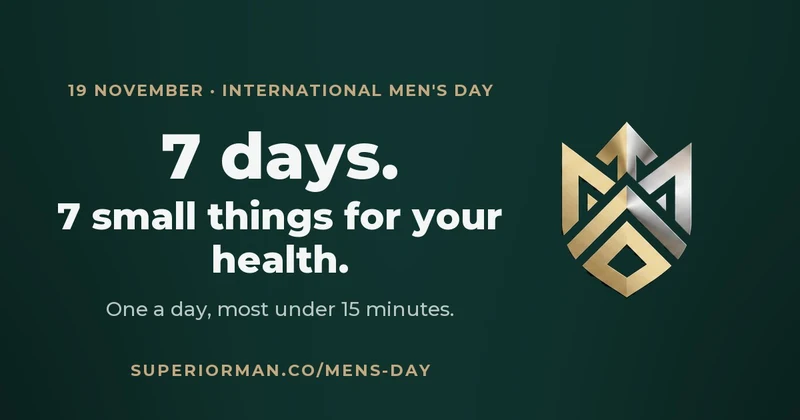
This Thursday, 19 November, is International Men's Day. It is a good moment for an uncomfortable fact: women outlive men in every region of the world.
That is not an opinion. It is what the World Health Organization found when it first broke its world health statistics down by sex. And the most important part of the finding is not the gap itself. It is why the gap exists.
It Is Not Mainly Your Genes
Some of the difference is biology. But a large part comes from how men live and how they treat their own health. The WHO report found that men are less likely to seek care than women, even when they have the same illness. In its words, differing attitudes to health care between men and women help to account for the gap.
Look at how many men you know who:
- have not seen a doctor in years, because "nothing hurts";
- drive tired, drink more than they admit, or skip the seatbelt "just this once";
- carry stress alone and never talk about it.
None of these feel dangerous on a Tuesday. Added up over 30 years, they are.
The Silent Part: Mental Health
The same WHO report found that suicide death rates were 75 % higher among men than among women (2016 data). Today, more than 740,000 people die by suicide every year worldwide, and it is the second leading cause of death among 15 to 29-year-olds.
Behind those numbers is a pattern most men recognise: you are "fine", you keep functioning, you do not want to be a burden, and nobody around you knows how heavy it has become. Strength is not carrying it alone. Strength is saying it out loud before it breaks you.
If you are struggling right now, talk to a doctor or someone you trust today. If you are in crisis, free and confidential help is available in your country: findahelpline.com.
5 Things You Can Change This Week
You do not need a new life. You need a few small habits that close the gap, one at a time.
1. Measure instead of guessing
High blood pressure rarely causes symptoms, so the only way to know is to measure it. It takes two minutes at a pharmacy or your doctor's. While you are there, ask when you last had a general check-up.
2. Do the two-minute self-check
Check your testicles once a month, in the shower, for any lump, swelling or change, and see a doctor if something is new. If you are over 50, or prostate cancer runs in your family, ask your doctor about a check.
3. Move every day
Adults are advised to get 150 to 300 minutes of moderate activity a week. That is about 30 minutes a day: a brisk walk, a run, push-ups and squats at home. You do not need a gym, you need a time slot. If you are starting from zero, see how to rebuild strength and energy after 30.
4. Protect your sleep
Same bedtime every night, screens off 45 minutes before bed, phone charging outside the bedroom. Poor sleep makes everything else harder: mood, patience, food choices, training. Our energy and sleep guide has a simple evening routine you can copy.
5. Have one honest conversation
Call a friend, not a text, and ask how he really is. Then tell him how you really are. It feels awkward for about a minute. Then it feels like relief. If stress is what you carry most, start with how to leave work stress at the door and the stress guide.
Three Mistakes That Keep Men Stuck
Waiting for a symptom. Many serious conditions, including high blood pressure, are quiet at first. "Nothing hurts" is not the same as "nothing is wrong".
Fixing everything at once. Five new habits on Monday usually means zero by Friday. Pick one, do it for seven days, then add the next.
Treating alcohol as a stress tool. A drink after a hard day feels like relief, but regular heavy drinking is linked to poor sleep, low mood and worse health over time. If this sounds familiar, read what weekend drinking costs your confidence.
Quick Answers
Is the gap only about biology? No. Biology plays a part, but the WHO points to behaviour and attitudes to health care as important reasons too, and those are the part you can influence.
How often should I get a check-up? It depends on your age and history, so ask your doctor. A good first step is simply to book one if you cannot remember your last.
What if I have no time? Start with the two-minute items: a blood pressure reading and one honest phone call. Both fit into a lunch break.
What if I am struggling right now? Do not wait for a better week. Talk to your doctor or someone you trust today, and use a local helpline if it is a crisis.
The Bottom Line
The gap between men and women is not fate. A big part of it is made of small decisions men make every day: to wait, to push through, to keep quiet. Each of those can be made differently, starting this week.
For International Men's Day we put the seven-day version of this on one page you can send to a friend: 7 days, 7 small things for your health.
Sources: WHO World Health Statistics 2019, reported by UN News, Women outlive men everywhere; WHO, Suicide fact sheet; NHS, High blood pressure; NHS, Testicular cancer; NHS, Prostate cancer; WHO, Physical activity.
Self-improvement education, not medical advice. If something worries you, see a doctor.
Take the Next Step: Want to see where your energy, focus and habits stand right now? Take the free 3-minute assessment and get one step for today.